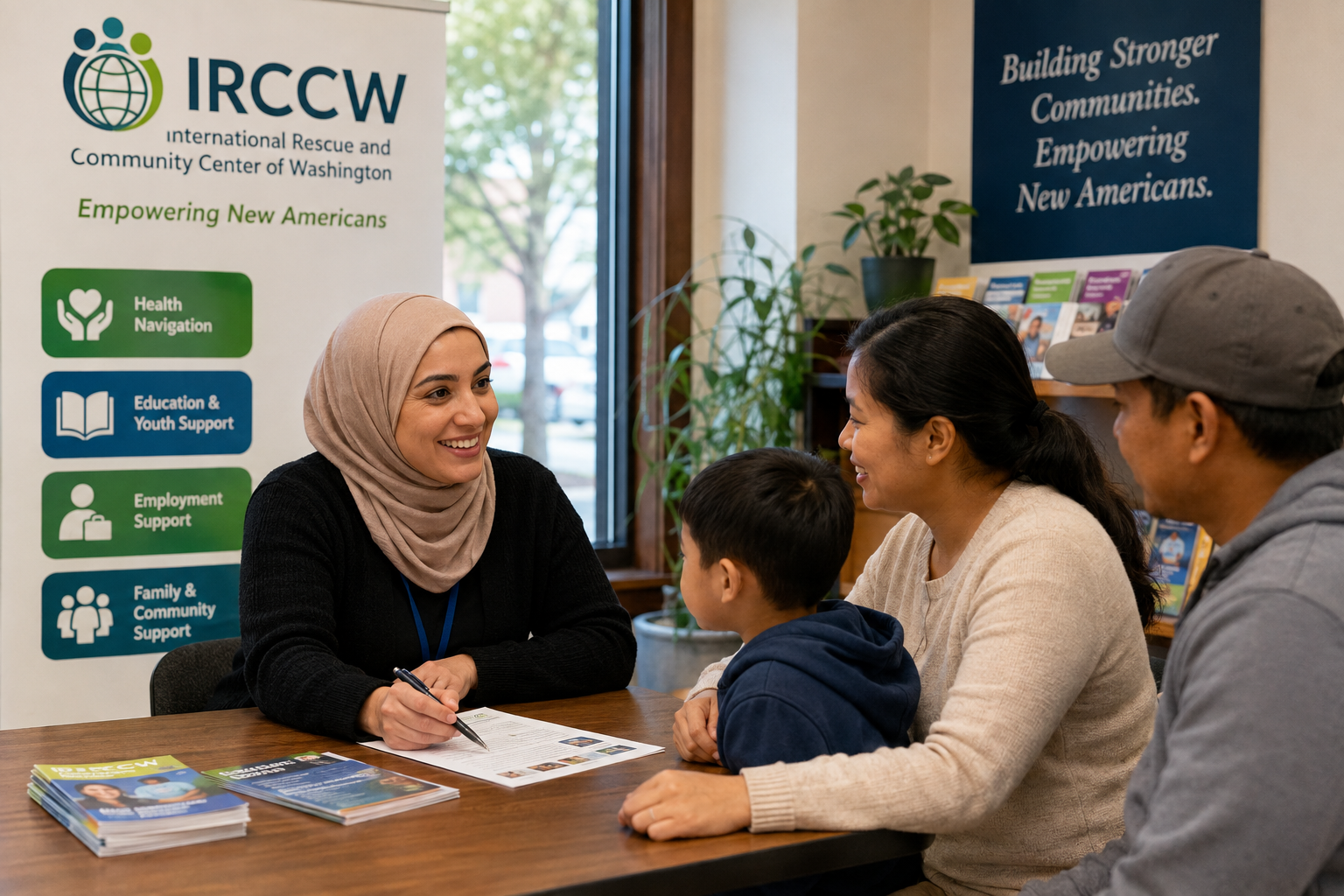
Moving to a new country means starting over: a new language, a new healthcare system, a new set of rules for everything from renting an apartment to enrolling a child in school. For thousands of families across South King County, that transition happens with support from the International Rescue and Community Center of Washington (IRCCW), based right here in Kent.
If you’re searching for immigrant and refugee services in Kent, WA, whether for yourself, a family member, or someone you’re helping resettle, this guide walks through what IRCCW does, who it serves, and how to connect with the organization’s programs.
Who IRCCW Serves
IRCCW works with immigrants and refugees throughout Kent and the greater South King County area, a region that has become one of the most ethnically and linguistically diverse in Washington State. The organization’s mission centers on promoting self-advocacy, facilitating system navigation, and ensuring equitable access to health care, language that reflects a deliberate, practical approach rather than a generic charity pitch.
That mission plays out in day-to-day work with:
- Newly arrived refugee families adjusting to life in the U.S.
- Long-settled immigrants who still face language or systemic barriers
- Elderly community members navigating Medicare, Medicaid, or insurance for the first time
- Parents trying to understand school enrollment, IEPs, or vaccination requirements
- Individuals seeking help with employment, housing, or legal processes
Core Services: Community Health Navigation for Immigrants
One of IRCCW’s most requested services is health system navigation. U.S. healthcare, with its insurance networks, referral systems, co-pays, and specialist appointments, is confusing even for English speakers who grew up here. For someone arriving from another country, it can be a genuine barrier to getting care at all.
IRCCW’s community health navigators help people:
- Understand and enroll in health insurance, including Medicaid and Apple Health
- Find culturally and linguistically appropriate providers
- Schedule and prepare for medical appointments
- Interpret medical instructions and follow-up care plans
- Connect with mental health resources, often a sensitive and under-addressed need in refugee communities
This isn’t just translation, it’s advocacy. A navigator’s job is to make sure a patient actually understands their diagnosis, their options, and their rights within the system, not just the words being said in the room.
Refugee Community Programs Across Washington
While IRCCW is headquartered in Kent, its impact reaches families across the broader refugee community programs in Washington landscape. These programs typically include:
- Cultural orientation for newly arrived families, everything from using public transit to understanding tenant rights
- English language support, often paired with practical, task-based learning (filling out forms, reading mail, job applications)
- Employment readiness, including resume help and connections to employers who work with resettlement agencies
- Youth and family programming that helps kids and parents adjust together, rather than leaving children to navigate two cultures alone
Because IRCCW is smaller and more community-embedded than large national resettlement agencies, families often describe the experience as more personal; staff and volunteers frequently share language, culture, or lived experience with the people they serve.
Immigrant Family Support Services in Washington: What Sets IRCCW Apart
Washington State has no shortage of organizations doing immigrant and refugee work. World Relief and the Refugee and Immigrant Family Center (RFSC) are two well-known names in the space. What distinguishes IRCCW is its hyper-local focus on Kent and South King County, and its emphasis on self-advocacy as an outcome, not just service delivery.
In practice, that means IRCCW doesn’t just solve a problem for a family once; it works to make sure the family understands the system well enough to navigate it independently next time. That could look like:
- Teaching a parent how to read a school district letter, not just translating it once
- Walking someone through how to schedule their own follow-up doctor’s visit, not just booking it for them
- Explaining why a benefits application was denied and what to do next, building long-term confidence with U.S. systems
For immigrant family support services in Washington, this approach matters. Resettlement is not a single event; it’s a years-long process, and organizations that build capacity rather than dependency tend to produce better long-term outcomes for families.
How to Connect with IRCCW in Kent, WA
If you or someone you know could benefit from IRCCW’s programs, whether that’s health navigation, cultural orientation, or general support adjusting to life in Washington, reaching out directly is the best first step. Case workers, social workers, and family members are also welcome to make referrals on behalf of someone who needs support.
Organizations like IRCCW rely heavily on community awareness and donor support to keep programs running. If you’re in a position to volunteer, donate, or simply spread the word about IRCCW Kent WA and the services it provides, that support directly extends the organization’s ability to help more New Americans build stable, self-sufficient lives in Washington.
Frequently Asked Questions
What services does IRCCW offer to immigrants and refugees in Kent, WA? IRCCW offers community health navigation, cultural orientation, English language support, employment readiness help, and family/youth programming for immigrants and refugees in Kent and the surrounding South King County area.
Who is eligible for IRCCW’s programs? Programs are generally open to immigrants and refugees living in the Kent and South King County area, regardless of how long they’ve been in the U.S., from newly arrived families to those who resettled years ago and still face language or systemic barriers.
Is there a cost to use IRCCW’s services? IRCCW is a community-based nonprofit, and its core services are typically provided free of charge to the individuals and families it serves. Availability can depend on program funding, so it’s best to confirm current offerings directly.
Can a case worker or family member make a referral on someone’s behalf? Yes. Social workers, case managers, teachers, and family members can refer someone to IRCCW for support; the person doesn’t need to reach out on their own first.
How is IRCCW different from World Relief or RFSC? IRCCW’s focus is hyper-local to Kent and South King County, with an emphasis on building long-term self-advocacy skills rather than one-time problem-solving. Families often describe the experience as more personal, with staff who share language or lived experience with the communities they serve.
How can I support IRCCW if I don’t need its services myself? You can volunteer, donate, or help spread awareness of IRCCW’s work. Community support directly affects how many families the organization can reach with health navigation, cultural orientation, and other services.
Conclusion
Resettling in a new country isn’t a single event. It’s a long process of learning systems that longtime residents take for granted, from healthcare to housing to school enrollment. IRCCW exists to make that process navigable, not just survivable, for immigrant and refugee families in Kent, WA. Through community health navigation, cultural orientation, and hands-on advocacy, the organization helps New Americans build the confidence and know-how to stand on their own within U.S. systems.
Whether you’re new to the country, supporting someone who is, or simply looking for a local organization worth backing, IRCCW’s work in Kent and South King County is a clear example of immigrant and refugee support done with long-term impact in mind.