
Latest News

The Immigrants and Refugees Community Council of Washington (IRCCW) recently held a heartwarming graduation ceremony for the 2024 cohort of its Arabic School Program. This event not only celebrated the academic achievements of the students but also highlighted the importance of cultural preservation and community support.
A Glimpse into the Arabic School Program
The Arabic School Program, one of IRCCW’s cornerstone initiatives, provides a robust educational foundation for elementary and middle-school-aged children in King County. Held weekly at Kent Meridian High School, the program offers a structured environment for students to enhance their Arabic language skills, ensuring they maintain a strong connection to their cultural heritage while integrating into American society (IRCCW) (IRCCW).
The Graduation Ceremony
The 2024 graduation ceremony was a vibrant celebration of the students’ dedication and hard work. Families, friends, and community members gathered to honor the graduates, whose achievements symbolize the strength and resilience of the Immigrants and Refugees Community Council of Washington. The ceremony included speeches from educators and community leaders, cultural performances, and the presentation of certificates to the graduates (Elevate Washington).
Empowering the Community
IRCCW, established in 1998, has been pivotal in supporting Immigrants and Refugees Community Council of Washington in the Seattle area. Through programs like the Arabic School, the center fosters a sense of belonging and empowerment among its members. By providing access to education, social services, and cultural events, IRCCW helps individuals and families achieve self-sufficiency and thrive in their new environment (IRCCW) (IRCCW).
Looking Ahead
As IRCCW continues to grow and expand its services, the impact of its programs on the community becomes increasingly evident. The Arabic School Program is just one example of how the center is making a difference, offering a platform for cultural exchange and mutual support. The success of the 2024 graduates is a testament to the program’s effectiveness and the community’s commitment to preserving its cultural identity while embracing new opportunities.
For more information about the By celebrating these milestones, the Immigrants and Refugees Community Council of Washington not only honors its students but also reinforces the values of community, culture, and education that are essential for the continued growth and success of IRCCW-Americans in Washington.
Center of Washington and its programs, visit IRCCW’s website.
By celebrating these milestones, the Immigrants and Refugees Community Council of Washington Center not only honors its students but also reinforces the values of community, culture, and education that are essential for the continued growth and success of IRCCW-Americans in Washington.
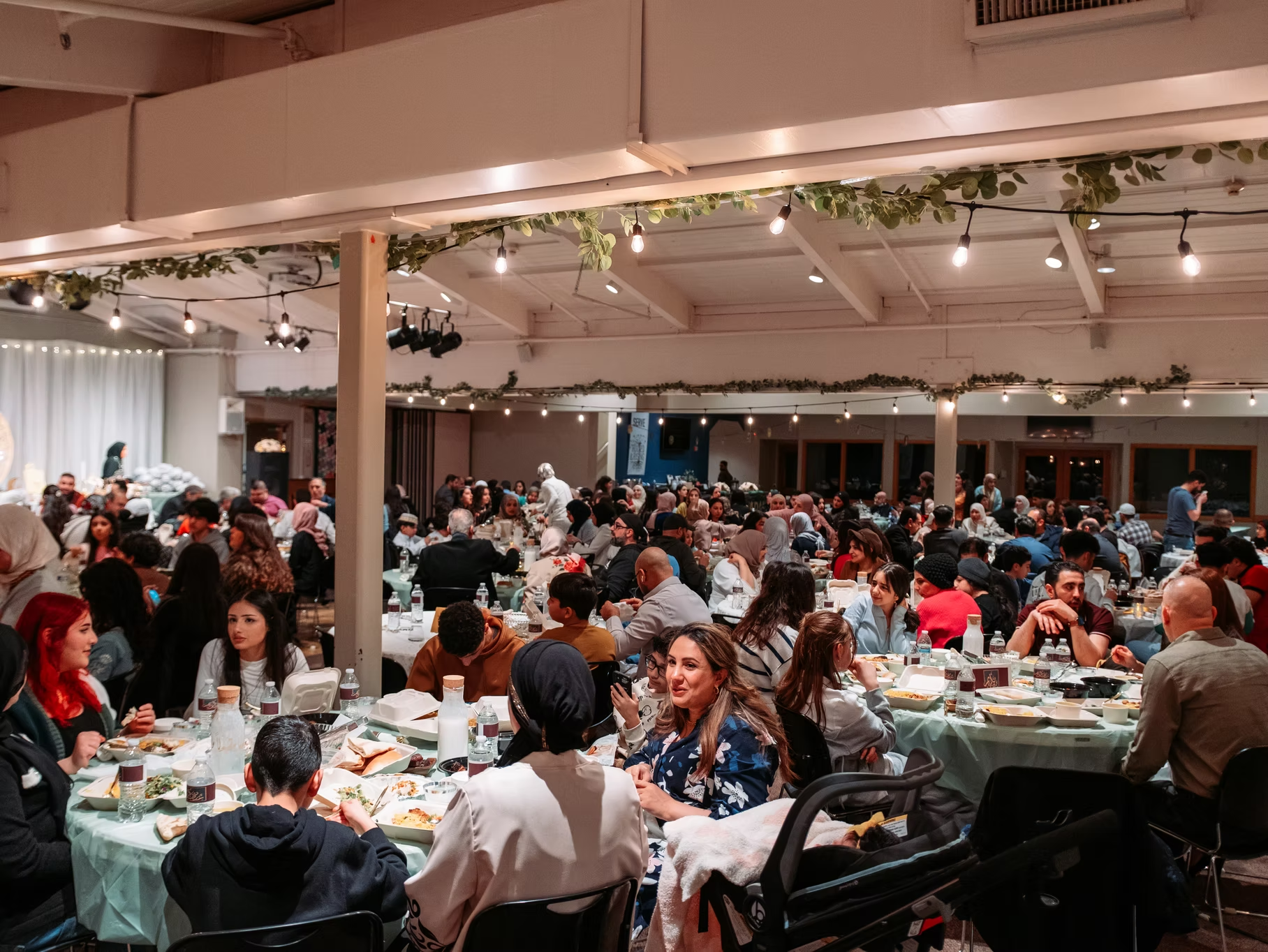
The Immigrants and Refugees Community Council of Washington (IRCCW) recently hosted a successful Ramadan dinner event, drawing community members together to break their fast and celebrate the holy month. Held at the center in Kent, WA, the event showcased traditional IRCCW dishes and featured inspiring speeches from local leaders, emphasizing the values of charity, compassion, and unity central to Ramadan.
The dinner also served as a platform to highlight IRCCW’s various support programs, including educational and social services for IRCCW refugees and immigrants. Volunteers played a crucial role in organizing the event, ensuring a smooth and enjoyable experience for all attendees .
For more information about IRCCW and its initiatives, visit IRCCW’s website.
By celebrating these important cultural events, IRCCW fosters a sense of community and preserves its rich heritage, promoting understanding and solidarity within the wider community.
Abbas Makassees has plans and a destination, but he often has trouble getting there.
So the IRCCW-American teen often turns to a conveniently located center, a hub tucked away in a modest, two-story building on Kent’s East Hill.
“It is really important, especially for teens with needs,” said the 17-year-old Kentlake High School junior. “It’s a place to gather for all of us … helps us get together and to get around. … You see, many of us don’t have a car.”
The Immigrants and Refugees Community Council of Washington recently received the keys to a retired Metro Transit Vanpool van it will use to transport seniors and youth to events throughout the region.
For high school students, the van can make it possible for them to visit colleges, interview for a job or make an important appointment.
Transportation is among the many services the center provides as it continues to blossom as a go-to spot for many under-served people – primarily immigrants and refugees – from all walks, not just the Arabic-speaking community.
The center, established in 1998 as a nonprofit community-based organization centered in Seattle, has since spread its reach throughout South King County. Only recently has the center opened its doors in Kent, at 10610 SE Kent-Kangley Road, Suite 207.
The purpose of the center is clear, its demands great. The center continues to focus on providing culturally and linguistically competent social services to IRCCW refugees and immigrants in areas so they can become self-sufficient and make a successful transition to life here.
Yahya Algarib, the center’s executive director, said the center is making a difference. The hub’s many resettlement services throughout the region serve about 500 men, women and children each year, helping them gain their feet financially and to better assimilate socially and culturally to their new home.
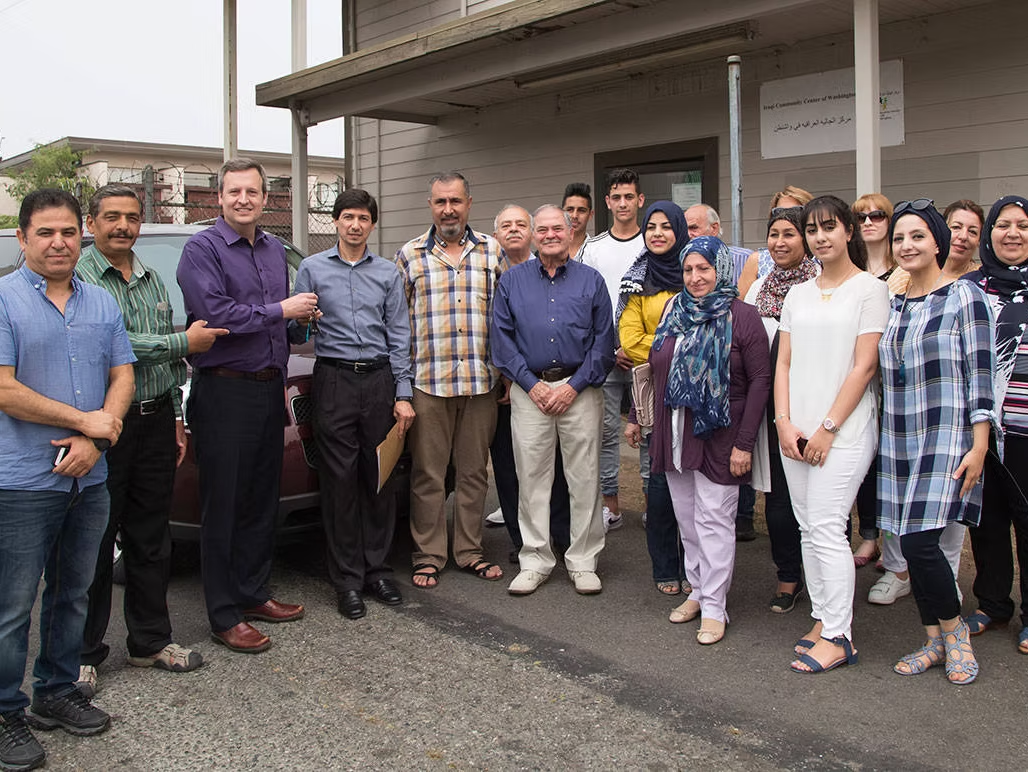
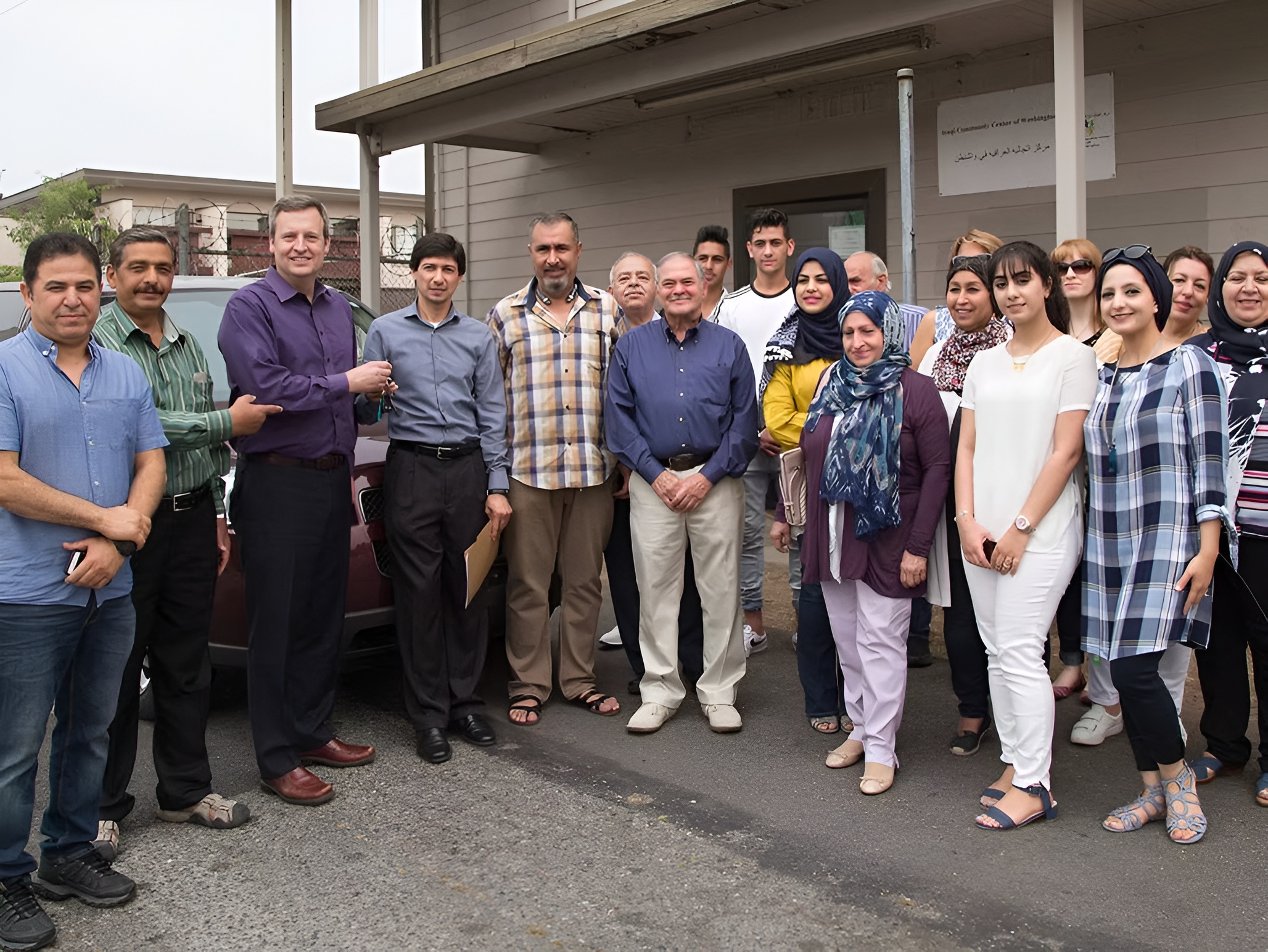
King County Council member Dave Upthegrove presented to the staff of Kent’s Immigrants and Refugees Community Council of Washington (IRCCW) the keys to a retired Metro Transit Vanpool van the center will be using to transport seniors and youth to events throughout the region.
The IRCCW is dedicated to ensuring the economic success and effective integration of Immigrants and Refugees Community Council of Washington members through advocacy, culturally competent services, leadership development and civic engagement.
IRCCW will use the van to take high school students to visit colleges, community colleges, and various industry/job sectors.
“This van is going to make a difference in the lives of the students we serve,” said Yahya Algarib, executive director of the IRCCW. “We’re grateful for Council member Upthegrove’s interest in helping us add capacity, and we can’t wait to put the van to use.”
“It is often difficult for high school students to visualize the academic and professional opportunities available to them after graduation,” Upthegrove said. “I am thrilled to play a role in donating this van to the IRCCW, which will encourage more students to reach their potential.”
Added Jasim Al Ghuraibawi: “I honestly do appreciate this gesture from the King County government. They keep a good relationship with the American-Immigrants and Refugees Community Council of Washington and take care of its needs.”
The vanpool program provides mobility for a diverse array of King County residents, supports the positive work of various local organizations and relieves traffic congestion by reducing the need for single-occupancy vehicles.
“We choose organizations who do a lot (for the community with so little,” Upthegrove said. “They will make good use of (the vanpool van).”
Three other organizations in Council District 5 will be receiving surplus vans:
At IRCCW, health care access is part of its commitment to help immigrant and refugee communities feel safe and supported in Washington state. Since 1998, IRCCW has served families through culturally and linguistically specific social services, case management, transportation support, and referrals that help people move from survival toward long-term well being.
This work reflects a simple belief: health is a fundamental human right, and every person should be able to seek healthcare without fear, confusion, or shame. Through community outreach, health screenings, primary care navigation, and apple health expansion guidance, IRCCW helps immigrants, refugees, neighbors, providers, and community members understand the services and resources available to them.
IRCCW Programs Across Washington State
IRCCW’s programs serve families across Washington, with deep roots in King County, South King County, Kent, and the Seattle area. The organization’s mission, led by Yahya Al-Garib, is to promote self-advocacy, raise cultural awareness, support accessibility, facilitate system navigation, and ensure equitable access to health care through partnerships, direct service, and capacity building.
IRCCW’s programs include social services and case management, early learning and family support, housing and homelessness prevention, youth education, Parent Child Plus, and senior community support. These programs address employment, housing, healthcare connections, public benefits, language barriers, and family stability together, because coverage alone is not enough when transportation, food, work, school, or fear create barriers.
Health Screenings and Primary Care for Refugee Communities
For refugee communities, early domestic arrival screenings are often the first bridge between the health system in a home country and the health care system in the United States. The Washington State Department of Health Refugee and Immigrant Health Program coordinates medical screening work with local health jurisdictions, providers, and the Office of Refugee and Immigrant Assistance.
These screenings should review urgent medical needs, vaccinations, tuberculosis risk, hepatitis and HIV testing, sexually transmitted infections, lead exposure, nutrition, chronic disease, vision, dental needs, reproductive health, and mental health. A structured response matters. When a tuberculosis screen is positive or symptoms are present, the person needs timely follow-up, public health coordination, and referrals for diagnosis or treatment. When lead risk is identified, children and adults may need blood lead testing, household education, and specialty care.
King County Primary Care Coordination and Routine Screenings
In King County, coordination means connecting each person to a primary care medical home, not only a one-time appointment. Screening clinics, community clinics, Harborview Medical Center networks, public health teams, and community-based organizations can work with IRCCW to help patients understand where to go next, what documents to bring, and how to follow up.
A practical timeline can help new arrivals. In the first 30 days, prioritize urgent prescriptions, pregnancy care, uncontrolled pain, infectious symptoms, and safety concerns. Within the first 90 days, complete domestic medical screening, immunizations, TB testing, lead screening for children and high-risk adults, STI screening, mental health screening, and referrals. Within six to twelve months, review chronic conditions, dental care, vision care, prescription medications, trauma recovery, school needs, and employment-related health concerns.
Apple Health Expansion and Health Coverage Assistance
IRCCW also helps families understand apple health, eligibility, and health coverage options. The Washington State Health Care Authority Apple Health Expansion program provides free healthcare coverage for some uninsured immigrants who qualify and do not qualify for other Apple Health programs because of immigration status. Enrollment can be limited, so guidance should include application review, waitlist or cap updates, and alternative paths.
Step-by-step assistance should include screening for age, income, legal status, immigration status, household size, Washington residency, and current coverage. Navigators can help families complete applications, upload identity and income documents, select a plan when approved, and discuss benefits such as primary care, behavioral health, dental, pharmacy, interpreter services, transportation to covered appointments, and prescription medications.
Enrollment Support for Immigrant Communities
When Apple Health Expansion is full or a person does not qualify, IRCCW can help compare other options. Washington’s Section 1332 Waiver and immigrant health coverage initiative allows Washingtonians to purchase non-federally subsidized qualified health and dental plans regardless of immigration status. Some families may qualify for Apple Health for Kids, pregnancy coverage, Alien Emergency Medical for qualifying emergencies, or hospital charity care, which state materials say can offer free or reduced-fee hospital care to about half of Washingtonians.
Enrollment support should be multilingual and immigration-sensitive. Materials should explain that applying for health coverage through Washington Healthplanfinder does not automatically define a person by legal status. Navigator training should prepare staff to answer common calls, schedule a visit, review each application date, and offer guidance for families, including Health Care Authority resources for Ukrainian new arrivals.
Partnerships, Language Access, and Cultural Trust
IRCCW’s partnership model works because community leaders, interpreters, cultural liaisons, clinics, and trusted organizations share responsibility. Statewide models, including Island County, show how transportation and referral services can help refugees and immigrants reach care. Peer organizations such as the Iraqi Community Center of Washington, the Office of Refugee and Immigrant Assistance, public health clinics, and local advocates can connect people to vital services and resettlement benefits with dignity.
Language access services are crucial for refugee healthcare. Providers should ask each patient whether they prefer an interpreter of a specific gender, avoid using children or family members as interpreters, and provide in-language educational materials. Trust grows through consistent patient-provider interactions, not one hurried visit. Providers should make space to discuss culture, religion, identities, trauma, gender, family roles, and values without assuming that everyone from one country or origin has the same experience.
Health Equity Initiatives and Policy Advocacy in Washington State
Broader health equity work requires more than enrollment. Many immigrant communities face disparities because of language barriers, lack of transportation, unfamiliarity with the American healthcare system, fear about immigration status, stigma around mental health, and different expectations shaped by care systems in other countries.
IRCCW can advance health equity by collecting community feedback, participating in advisory meetings, supporting policy efforts to expand eligibility, and helping providers understand culturally appropriate practices. EthnoMed’s Primary Care Provider Toolkit project notes that Washington state and King County are top resettlement destinations; its 15 interviews with Afghan, Ukrainian, and Iraqi refugee community leaders highlighted language access, prevalent mental health needs, trust, community-based organizations, and differences between U.S. and foreign health systems as major care issues.
Data, Monitoring, and Accountability
A strong health access program should track outcomes by community and county while protecting privacy. IRCCW can monitor how many people receive screening referrals, complete health coverage applications, select a primary care clinic, attend a follow-up appointment, and remain connected to care after six and twelve months.
Quarterly reports to stakeholders can review enrollment, primary care retention, transportation support, interpreter needs, referral completion, and community feedback. This data helps IRCCW, clinics, colleagues, funders, and leaders identify what is working, where barriers remain, and how to improve services without reducing anyone to a number.
How to Access IRCCW Services and Referrals
If you need assistance, start by contacting IRCCW through the hotline listed on the Contact page or by using the online contact form. Ask for health navigation, health screenings, Apple Health or health coverage assistance, primary care referrals, transportation options, or case management support.
Before your appointment, bring identification if available, proof of address, income or employment information, immigration documents if you have them, medication lists, vaccine records, hospital bills, and any letters from Washington Healthplanfinder, Apple Health, clinics, or hospitals. No one should delay seeking urgent care because paperwork is incomplete.
IRCCW’s vision is a welcoming community where immigrants and refugees can thrive. Whether you are a new arrival, a provider, an advocate, a neighbor, or a donor, you may support IRCCW’s community programs to help expand culturally sensitive services for immigrant and refugee families across Washington.
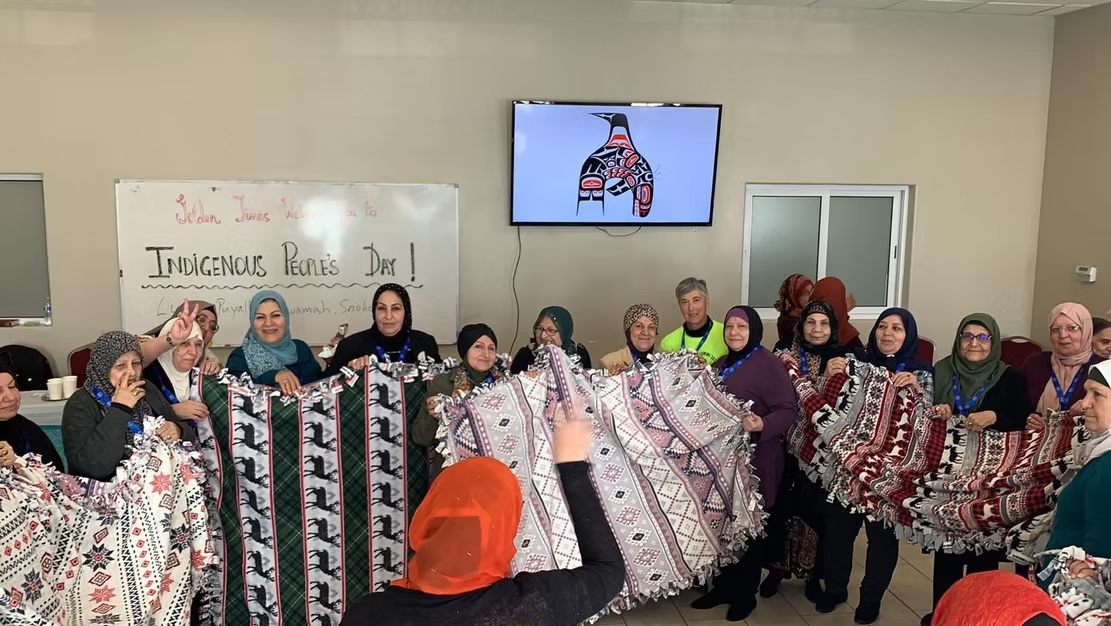
Washington community health support helps families understand health coverage, connect with medical care, access health services, and navigate local resources before small concerns become urgent problems. For immigrant and refugee families, support also needs to be culturally respectful, language-accessible, and centered on the whole family.
At the Immigrants and Refugees Community Council of Washington, IRCCW’s mission is to empower communities through self-advocacy, cultural awareness, accessibility, system navigation, equitable access to health care, direct service, partnership, and capacity building. Through IRCCW’s community programs, families can connect with social services, case management, healthcare connections, public benefits support, early learning, youth services, and family-centered resources.
Community Health Support Overview
Community health support is not only about finding a clinic. It is about helping families navigate care, coverage, transportation, language assistance, behavioral health services, and social and health services in a way that feels understandable and safe.
Access to affordable health care supports family stability. When families can enroll in health coverage, schedule routine care, speak with providers, refill medication, and ask questions early, they are less likely to delay care or rely on costly emergency room visits.
Washington features a broad network of community health support programs for families, including county access programs, certified navigator services, community clinics, care coordinators, behavioral health referral lines, and family-led support organizations. IRCCW helps you understand where to start and how to keep moving when the system feels confusing.
Who We Serve
IRCCW serves immigrant and refugee families, children, parents, pregnant individuals, seniors, youth, transition-age youth, and people with special health care needs. You may need help because you are new to Washington, have limited English, do not understand your coverage options, recently had a child, care for an older adult, or have concerns about medical bills.
You may also need support if your child has special health care needs, developmental concerns, behavioral health needs, or a condition that requires frequent appointments, medical equipment, dentists, specialists, therapy, or school-based coordination. Support can begin at birth, continue through childhood, and include transition planning as youth move toward adult health care.
Families may qualify for different programs depending on age, income, household size, immigration category, disability status, pregnancy, Medicare status, Medicaid eligibility, and county of residence. A navigator or care coordinator can help determine what may be covered and what documents are needed.
Core Community Health Services
IRCCW’s community model focuses on compassionate navigation. That may include helping you understand letters, prepare for calls, request interpreter support, connect with clinics, find transportation options, or ask a provider for a referral.
Core services may include:
- Care coordination for families managing multiple needs
- Certified navigator referrals for health insurance enrollment
- Behavioral health services linkages for children, teens, parents, and caregivers
- Transportation assistance when families need help getting to appointments
- Language assistance so you can speak with providers in a language you understand
- Education about preventive care, medication safety, family wellness, and public benefits
- Referral support for food, housing, early learning, disability services, and community supports
A care coordinator does more than give you a phone number. Care coordinators help families access community resources, navigate social services, establish trusting relationships, support healthy behaviors and lifestyles, explain available local services, and guide families through healthcare and community service systems.
Health Coverage and Apple Health Enrollment Support
Health coverage is often the first step toward consistent medical care. In Washington, Apple Health is the state’s Medicaid program, and Apple Health coverage is available at no cost for eligible individuals. You can review coverage options and enroll through Washington Healthplanfinder certified Navigators, who can help families understand eligibility, enrollment, renewal, and available assistance.
The Washington Health Benefit Exchange certifies Navigators to help people apply through Washington Healthplanfinder. PCHS also offers certified Navigators for health insurance applications and enrollment through Washington Healthplanfinder, which is useful for families in Kitsap, Mason, and Pierce County areas.
A simple enrollment checklist can help you prepare:
- Gather names, birth dates, addresses, and contact information for each person applying.
- Bring income information, such as pay stubs, employer details, or benefit letters.
- Bring immigration or residency documents if available or requested.
- Bring current insurance cards, Medicare information, or ProviderOne details if you have them.
- List your doctors, clinics, dentists, medications, and upcoming appointments.
- Ask whether you qualify for Apple Health, a Qualified Health Plan, financial assistance, or another local program.
- Ask how to check renewal status so coverage does not accidentally end.
Medicaid cuts or eligibility changes could jeopardize access for nearly 2 million Washingtonians who rely on Apple Health, including many children. That is why families should open mail, answer renewal notices, keep phones active, and ask for help as soon as a coverage notice is confusing.
Accessing Providers and Building a Medical Home
After you enroll, the next step is to access health care in a way that works for your family. Start by choosing a primary care provider through your health plan, community clinic, or local health center. Primary care providers help with routine care, preventive screenings, vaccinations, medication questions, referrals, and ongoing health concerns.
A medical home is not a building. It is a trusted place or care team that knows your history, listens to your concerns, coordinates referrals, and helps you plan care over time. For children with special health care needs, a medical home can help parents keep all parts of care connected.
Before your first visit, write down your top three concerns, current medications, allergies, past diagnoses, school or developmental concerns, and any safety worries at home. Bring insurance cards, vaccine records, hospital paperwork, and questions. You can also request an interpreter when making the appointment.
A family care notebook can make visits easier. Include appointment dates, provider names, phone numbers, medications, test results, referral status, therapy notes, school plans, emergency contacts, and transportation details. This tool helps patients, parents, providers, and care coordinators stay organized.
Community Care Hubs, Partnerships, and Specialized Children’s Programs
Community care hubs help families move from one doorway to many supports. In King County, the Community Health Access Program connects residents to health insurance, health care services, providers, and other resources. Help Me Grow Washington provides personalized support for families seeking health coverage, developmental resources, basic needs, and early childhood services.
Family Voices of Washington operates the Family-to-Family Health Information Center, which helps families of children and youth with special health care needs navigate complex healthcare systems, funding, coverage, and care choices. Families can also connect with trained volunteer parents through Parent to Parent programs for emotional support and practical guidance. Learn more through Family Voices of Washington.
Specialized support is especially important for children and youth with special health care needs. The Washington State Department of Health CYSHCN program supports children and youth who need extra health services, care coordination, and community-based support. At least 30 percent of federal Maternal and Child Health Block Grant funds support services and supports for children with special health care needs and their families.
Other partners may help with different needs. The Developmental Disabilities Administration assists families with services for qualifying disabilities. KidVantage provides essential goods for children experiencing poverty, homelessness, or family disruption. Community Health Care offers low-cost pharmacy services at its clinics. Community Support Services can help connect families to community resources for basic needs. These examples show why one strong referral can open several doors.
Navigation Tools, Referral Steps, and Immediate Help
Useful tools can make care easier to manage. Keep an appointment tracker, medication tracker, referral tracker, and document checklist in one folder or on your phone. Families who prefer paper can ask a care coordinator to help create a simple care notebook.
For online support, IRCCW can use referral forms that ask for the person’s name, preferred language, phone number, county, urgent needs, health coverage status, transportation barriers, and consent to be contacted. Providers can also refer families when they see unmet needs during a clinic visit.
To request help, use this simple script:
“Hello, my name is [name]. I live in [county]. I need help with health coverage, Apple Health, medical care, or a referral. I prefer to speak in [language]. Can someone help me schedule an appointment with a navigator or care coordinator?”
For children’s behavioral health, Washington’s Mental Health Referral Service for Children and Teens connects families to mental health providers who fit the child’s needs, location, and insurance. The COPE Project also provides caregiver support for parents navigating behavioral health services for a child or youth. In a crisis, call or text 988 for immediate mental health support.
Immigrant and refugee families may also benefit from federal refugee health and social service information through the Office of Refugee Resettlement, especially when learning how refugee-serving systems connect to local care, benefits, and community programs.
Member Benefits, Family Stories, and Outcomes
Some health plans offer member benefits such as preventive care rewards, wellness incentives, transportation benefits, nurse advice lines, dental coverage for eligible members, and pharmacy programs that reduce medication costs. Ask your plan what is covered before you pay out of pocket.
A family story may begin with a parent who misses appointments because the clinic calls only in English. With IRCCW support, the parent learns to request interpreter services, update phone contact details, enroll in Apple Health, and connect with a local clinic. The result is simple but powerful: fewer missed visits, clearer communication, and more confidence.
Another example may involve a teenager with anxiety and school concerns. A care coordinator helps the family call the Mental Health Referral Service, organize notes for the provider, and ask about transportation. The family still makes its own decisions, but it no longer has to navigate alone.
IRCCW can strengthen future family stories by collecting consent-based testimonials and measurable outcomes, such as number of navigator appointments scheduled, families connected to coverage, referrals completed, children linked to providers, or transportation barriers resolved.
Frequently Asked Questions and Next Steps
Can IRCCW help me enroll in Apple Health?
IRCCW can help you understand where to start, prepare documents, and connect with certified navigator resources. A navigator can help you enroll, check eligibility, review coverage options, and understand renewal steps.
What if I do not speak English well?
You can request language assistance when calling clinics, health plans, hotlines, and providers. IRCCW’s culturally and linguistically responsive model helps families ask for interpretation and understand next steps.
What should I do if my child needs special health care?
Start by asking your child’s primary care provider for referrals and documentation. Then ask about CYSHCN coordination, Family Voices of Washington, school supports, DDA eligibility, and local care coordination.
Can I get help with behavioral health services?
Yes. Families can contact the Mental Health Referral Service for Children and Teens, call 988 in a crisis, or ask IRCCW for help connecting to behavioral health services and caregiver support resources.
Where can I submit new FAQ suggestions?
Use the IRCCW contact page to send questions that families commonly ask about healthcare, Apple Health, Medicaid, Medicare, transportation, clinics, referrals, or community supports.
To connect with IRCCW, contact the IRCCW Community Center of Washington at 24401 104th Ave SE #102, Kent, WA 98030. You can email info@irccw.org or call (253) 243-7744 to learn more, request support, or ask about culturally and linguistically tailored health navigation services.