
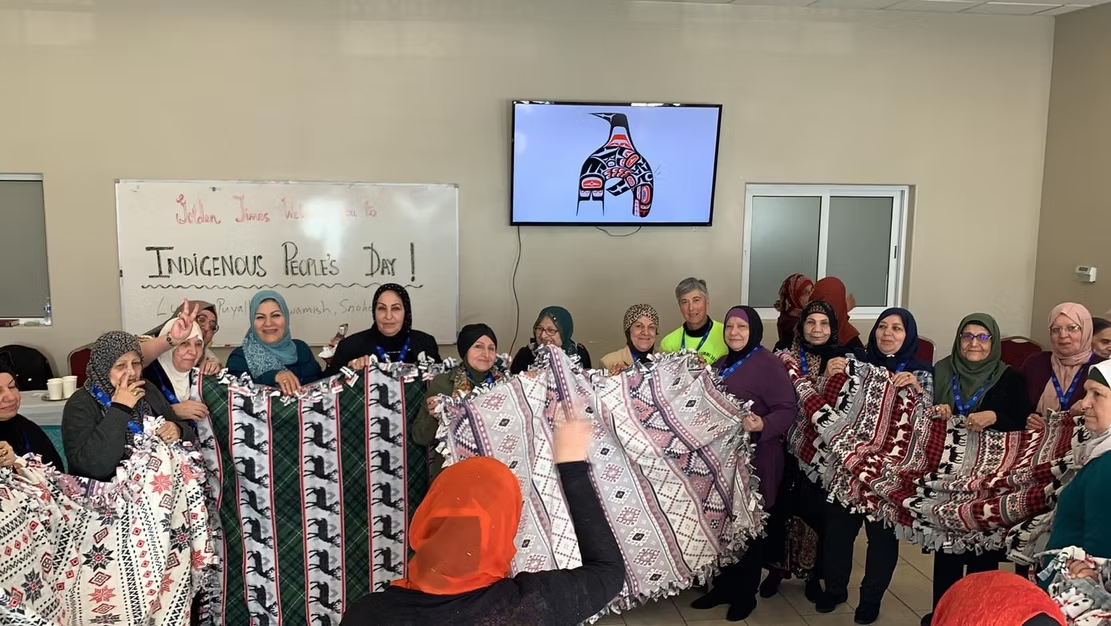
Washington community health support helps families understand health coverage, connect with medical care, access health services, and navigate local resources before small concerns become urgent problems. For immigrant and refugee families, support also needs to be culturally respectful, language-accessible, and centered on the whole family.
At the Immigrants and Refugees Community Council of Washington, IRCCW’s mission is to empower communities through self-advocacy, cultural awareness, accessibility, system navigation, equitable access to health care, direct service, partnership, and capacity building. Through IRCCW’s community programs, families can connect with social services, case management, healthcare connections, public benefits support, early learning, youth services, and family-centered resources.
Community Health Support Overview
Community health support is not only about finding a clinic. It is about helping families navigate care, coverage, transportation, language assistance, behavioral health services, and social and health services in a way that feels understandable and safe.
Access to affordable health care supports family stability. When families can enroll in health coverage, schedule routine care, speak with providers, refill medication, and ask questions early, they are less likely to delay care or rely on costly emergency room visits.
Washington features a broad network of community health support programs for families, including county access programs, certified navigator services, community clinics, care coordinators, behavioral health referral lines, and family-led support organizations. IRCCW helps you understand where to start and how to keep moving when the system feels confusing.
Who We Serve
IRCCW serves immigrant and refugee families, children, parents, pregnant individuals, seniors, youth, transition-age youth, and people with special health care needs. You may need help because you are new to Washington, have limited English, do not understand your coverage options, recently had a child, care for an older adult, or have concerns about medical bills.
You may also need support if your child has special health care needs, developmental concerns, behavioral health needs, or a condition that requires frequent appointments, medical equipment, dentists, specialists, therapy, or school-based coordination. Support can begin at birth, continue through childhood, and include transition planning as youth move toward adult health care.
Families may qualify for different programs depending on age, income, household size, immigration category, disability status, pregnancy, Medicare status, Medicaid eligibility, and county of residence. A navigator or care coordinator can help determine what may be covered and what documents are needed.
Core Community Health Services
IRCCW’s community model focuses on compassionate navigation. That may include helping you understand letters, prepare for calls, request interpreter support, connect with clinics, find transportation options, or ask a provider for a referral.
Core services may include:
- Care coordination for families managing multiple needs
- Certified navigator referrals for health insurance enrollment
- Behavioral health services linkages for children, teens, parents, and caregivers
- Transportation assistance when families need help getting to appointments
- Language assistance so you can speak with providers in a language you understand
- Education about preventive care, medication safety, family wellness, and public benefits
- Referral support for food, housing, early learning, disability services, and community supports
A care coordinator does more than give you a phone number. Care coordinators help families access community resources, navigate social services, establish trusting relationships, support healthy behaviors and lifestyles, explain available local services, and guide families through healthcare and community service systems.
Health Coverage and Apple Health Enrollment Support
Health coverage is often the first step toward consistent medical care. In Washington, Apple Health is the state’s Medicaid program, and Apple Health coverage is available at no cost for eligible individuals. You can review coverage options and enroll through Washington Healthplanfinder certified Navigators, who can help families understand eligibility, enrollment, renewal, and available assistance.
The Washington Health Benefit Exchange certifies Navigators to help people apply through Washington Healthplanfinder. PCHS also offers certified Navigators for health insurance applications and enrollment through Washington Healthplanfinder, which is useful for families in Kitsap, Mason, and Pierce County areas.
A simple enrollment checklist can help you prepare:
- Gather names, birth dates, addresses, and contact information for each person applying.
- Bring income information, such as pay stubs, employer details, or benefit letters.
- Bring immigration or residency documents if available or requested.
- Bring current insurance cards, Medicare information, or ProviderOne details if you have them.
- List your doctors, clinics, dentists, medications, and upcoming appointments.
- Ask whether you qualify for Apple Health, a Qualified Health Plan, financial assistance, or another local program.
- Ask how to check renewal status so coverage does not accidentally end.
Medicaid cuts or eligibility changes could jeopardize access for nearly 2 million Washingtonians who rely on Apple Health, including many children. That is why families should open mail, answer renewal notices, keep phones active, and ask for help as soon as a coverage notice is confusing.
Accessing Providers and Building a Medical Home
After you enroll, the next step is to access health care in a way that works for your family. Start by choosing a primary care provider through your health plan, community clinic, or local health center. Primary care providers help with routine care, preventive screenings, vaccinations, medication questions, referrals, and ongoing health concerns.
A medical home is not a building. It is a trusted place or care team that knows your history, listens to your concerns, coordinates referrals, and helps you plan care over time. For children with special health care needs, a medical home can help parents keep all parts of care connected.
Before your first visit, write down your top three concerns, current medications, allergies, past diagnoses, school or developmental concerns, and any safety worries at home. Bring insurance cards, vaccine records, hospital paperwork, and questions. You can also request an interpreter when making the appointment.
A family care notebook can make visits easier. Include appointment dates, provider names, phone numbers, medications, test results, referral status, therapy notes, school plans, emergency contacts, and transportation details. This tool helps patients, parents, providers, and care coordinators stay organized.
Community Care Hubs, Partnerships, and Specialized Children’s Programs
Community care hubs help families move from one doorway to many supports. In King County, the Community Health Access Program connects residents to health insurance, health care services, providers, and other resources. Help Me Grow Washington provides personalized support for families seeking health coverage, developmental resources, basic needs, and early childhood services.
Family Voices of Washington operates the Family-to-Family Health Information Center, which helps families of children and youth with special health care needs navigate complex healthcare systems, funding, coverage, and care choices. Families can also connect with trained volunteer parents through Parent to Parent programs for emotional support and practical guidance. Learn more through Family Voices of Washington.
Specialized support is especially important for children and youth with special health care needs. The Washington State Department of Health CYSHCN program supports children and youth who need extra health services, care coordination, and community-based support. At least 30 percent of federal Maternal and Child Health Block Grant funds support services and supports for children with special health care needs and their families.
Other partners may help with different needs. The Developmental Disabilities Administration assists families with services for qualifying disabilities. KidVantage provides essential goods for children experiencing poverty, homelessness, or family disruption. Community Health Care offers low-cost pharmacy services at its clinics. Community Support Services can help connect families to community resources for basic needs. These examples show why one strong referral can open several doors.
Navigation Tools, Referral Steps, and Immediate Help
Useful tools can make care easier to manage. Keep an appointment tracker, medication tracker, referral tracker, and document checklist in one folder or on your phone. Families who prefer paper can ask a care coordinator to help create a simple care notebook.
For online support, IRCCW can use referral forms that ask for the person’s name, preferred language, phone number, county, urgent needs, health coverage status, transportation barriers, and consent to be contacted. Providers can also refer families when they see unmet needs during a clinic visit.
To request help, use this simple script:
“Hello, my name is [name]. I live in [county]. I need help with health coverage, Apple Health, medical care, or a referral. I prefer to speak in [language]. Can someone help me schedule an appointment with a navigator or care coordinator?”
For children’s behavioral health, Washington’s Mental Health Referral Service for Children and Teens connects families to mental health providers who fit the child’s needs, location, and insurance. The COPE Project also provides caregiver support for parents navigating behavioral health services for a child or youth. In a crisis, call or text 988 for immediate mental health support.
Immigrant and refugee families may also benefit from federal refugee health and social service information through the Office of Refugee Resettlement, especially when learning how refugee-serving systems connect to local care, benefits, and community programs.
Member Benefits, Family Stories, and Outcomes
Some health plans offer member benefits such as preventive care rewards, wellness incentives, transportation benefits, nurse advice lines, dental coverage for eligible members, and pharmacy programs that reduce medication costs. Ask your plan what is covered before you pay out of pocket.
A family story may begin with a parent who misses appointments because the clinic calls only in English. With IRCCW support, the parent learns to request interpreter services, update phone contact details, enroll in Apple Health, and connect with a local clinic. The result is simple but powerful: fewer missed visits, clearer communication, and more confidence.
Another example may involve a teenager with anxiety and school concerns. A care coordinator helps the family call the Mental Health Referral Service, organize notes for the provider, and ask about transportation. The family still makes its own decisions, but it no longer has to navigate alone.
IRCCW can strengthen future family stories by collecting consent-based testimonials and measurable outcomes, such as number of navigator appointments scheduled, families connected to coverage, referrals completed, children linked to providers, or transportation barriers resolved.
Frequently Asked Questions and Next Steps
Can IRCCW help me enroll in Apple Health?
IRCCW can help you understand where to start, prepare documents, and connect with certified navigator resources. A navigator can help you enroll, check eligibility, review coverage options, and understand renewal steps.
What if I do not speak English well?
You can request language assistance when calling clinics, health plans, hotlines, and providers. IRCCW’s culturally and linguistically responsive model helps families ask for interpretation and understand next steps.
What should I do if my child needs special health care?
Start by asking your child’s primary care provider for referrals and documentation. Then ask about CYSHCN coordination, Family Voices of Washington, school supports, DDA eligibility, and local care coordination.
Can I get help with behavioral health services?
Yes. Families can contact the Mental Health Referral Service for Children and Teens, call 988 in a crisis, or ask IRCCW for help connecting to behavioral health services and caregiver support resources.
Where can I submit new FAQ suggestions?
Use the IRCCW contact page to send questions that families commonly ask about healthcare, Apple Health, Medicaid, Medicare, transportation, clinics, referrals, or community supports.
To connect with IRCCW, contact the IRCCW Community Center of Washington at 24401 104th Ave SE #102, Kent, WA 98030. You can email info@irccw.org or call (253) 243-7744 to learn more, request support, or ask about culturally and linguistically tailored health navigation services.